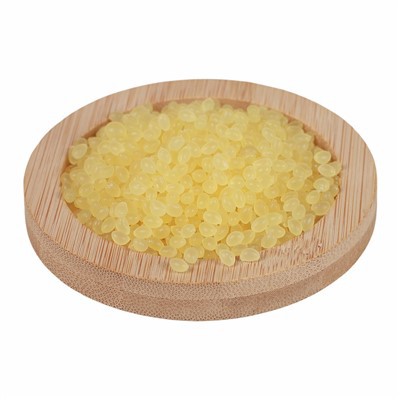
With the global energy structure shifting towards green and low-carbon development, the photovoltaic industry has entered a phase of rapid growth. As a crucial auxiliary material in solar module manufacturing, hot melt adhesives are increasingly widely used in the photovoltaic industry due to their excellent bonding, sealing, and environmentally friendly properties. From photovoltaic module encapsulation to junction box fixing, frame sealing, and energy storage system assembly, hot melt adhesives have become one of the essential materials for ensuring the reliability and durability of photovoltaic products.
I. Basic Characteristics of Hot Melt Adhesives
Hot melt adhesives are environmentally friendly adhesives with thermoplastic resins as their main component. They exhibit good fluidity after melting upon heating and can quickly bond upon cooling. Compared to traditional solvent-based adhesives, hot melt adhesives have the following advantages:
Fast Curing Speed: No long curing time is required, enabling rapid production and improving the manufacturing efficiency of photovoltaic modules.
Environmentally Friendly and Solvent-Free: Contains no VOCs, aligning better with the green manufacturing trend in the new energy industry.
Stable Bonding Performance: Exhibits excellent adhesion to metals, glass, plastics, and composite materials.
Excellent weather resistance
It can adapt to complex outdoor environments such as high temperature, low temperature, humidity, and ultraviolet radiation.
Strong automation adaptability
Suitable for high-speed dispensing, spraying, and automated production lines.
Due to these advantages, hot melt adhesives are gradually replacing some traditional adhesive solutions in the photovoltaic industry.
II. Main Applications of Hot Melt Adhesives in Photovoltaic Modules
1. Photovoltaic Module Frame Sealing
Photovoltaic modules are exposed to outdoor environments for extended periods, needing to withstand wind, rain, temperature changes, and ultraviolet radiation. Therefore, frame sealing is particularly critical. Hot melt adhesives can be used for bonding and sealing between aluminum alloy frames and glass, forming a good waterproof layer to prevent moisture from entering the module.
This application not only improves the overall mechanical strength of the module but also reduces the PID effect and electrical performance degradation caused by moisture intrusion, thereby extending the module's lifespan.
2. Junction Box Fixing and Sealing
The junction box is a crucial electrical connection component of a photovoltaic module, and its reliability directly affects the safe operation of the module. Hot melt adhesives are widely used for bonding and fixing junction boxes to the backsheet, while also providing sealing protection.
In this application, hot melt adhesives need to possess:
Good insulation properties
Excellent aging resistance
High temperature and humidity resistance
Long-term outdoor weather resistance
Especially under high temperature and direct sunlight, high-quality hot melt adhesives can maintain stable adhesion, preventing junction box detachment or water leakage.
3. Photovoltaic Backsheet Composite
Some photovoltaic backsheets utilize functional hot melt adhesive films during the composite processing to achieve composite bonding between multiple materials. Hot melt adhesive films are characterized by uniform thickness and stable adhesion, effectively improving the structural strength of the backsheet.
With the development of double-glass modules and lightweight modules, the role of hot melt adhesives in composite material bonding is becoming increasingly important.
4. Photovoltaic Cell Protection
In some flexible photovoltaic modules or thin-film solar products, hot melt adhesives can also be used to fix and cushion electronic components, reducing vibration damage during transportation and use.
Furthermore, hot melt adhesives possess certain cushioning properties, which can reduce the risk of micro-cracks caused by external impacts on brittle cells.

III. Applications of Hot Melt Adhesives in Photovoltaic Energy Storage
With the rapid popularization of "photovoltaic + energy storage" systems, the application of hot melt adhesives in energy storage battery modules is also expanding.
1. Battery Pack Fixing
Hot melt adhesives can be used to fix internal structural components of energy storage battery packs, offering features such as rapid molding and shock absorption.
2. Wire and Harness Fixing
Within energy storage systems, numerous wire harnesses require fixing and protection. Hot melt adhesives not only improve assembly efficiency but also reduce wire harness wear.
3. Waterproofing and Sealing
Some energy storage devices require high protection levels. Hot melt adhesives can be used for interface and casing sealing, improving system stability.

IV. Performance Requirements of Hot Melt Adhesives in the Photovoltaic Industry
Since photovoltaic products typically need to operate continuously outdoors for more than 25 years, the industry has placed higher demands on hot melt adhesives.
1. High and Low Temperature Resistance
Photovoltaic modules need to withstand extreme environments ranging from -40℃ to 85℃. Hot melt adhesives must maintain stable adhesion under temperature variations.
2. UV Resistance
Prolonged exposure to ultraviolet (UV) radiation can easily lead to material aging; therefore, hot melt adhesives need to possess excellent UV stability.
3. Damp Heat Resistance
High temperature and humidity environments accelerate adhesive failure; therefore, products must pass rigorous damp heat aging tests.
4. Electrical Insulation Performance
When used in electrical components such as junction boxes, hot melt adhesives need to possess stable insulation properties to ensure the safe operation of the modules.
V. Future Development Trends
With the development of new technologies such as N-type cells, TOPCon, HJT, and perovskite cells, photovoltaic modules are placing higher demands on adhesive materials. Future development directions for hot melt adhesives mainly include:
Higher weather resistance
Lower VOC emissions
Superior thermal conductivity
Stronger flame retardant properties
Adaptability to automated high-speed production
In addition, environmentally friendly bio-based hot melt adhesives and recyclable hot melt adhesives will also become important research directions in the future.
VI. Conclusion
Although hot melt adhesives are not the core power generation material in photovoltaic modules, they are an important auxiliary material for ensuring the reliability and long-term stable operation of the modules. Its widespread application in frame sealing, junction box fixing, backsheet lamination, and energy storage systems has greatly promoted the high efficiency, lightweight, and intelligent development of photovoltaic products.
With the continued expansion of the global new energy industry, the market demand for hot melt adhesives in the photovoltaic industry will continue to grow. In the future, high-performance, environmentally friendly, and multifunctional hot melt adhesive products will play an even more important role in the photovoltaic industry chain.