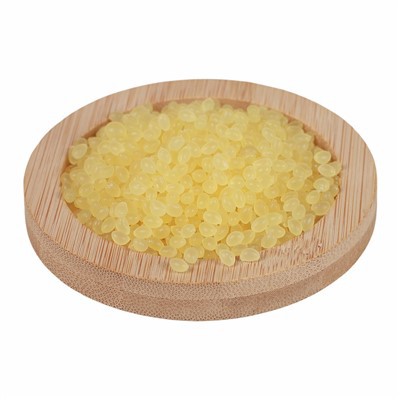
The special environment of high temperature and humidity in summer is highly prone to altering the viscosity, curing speed, and bonding performance of hot melt adhesives, making it a high-risk period for adhesive failure in industrial production, packaging, home manufacturing, and other scenarios. High temperature can prolong the open time of the adhesive and reduce its initial adhesion, while high humidity is prone to cause the adhesive to fail due to moisture absorption. Improper storage can also lead to deterioration of the adhesive, directly affecting the bonding quality and yield of products. Based on the characteristics of summer working conditions, we will sort out high-frequency problems in the industry and provide targeted solutions to help stabilize production.
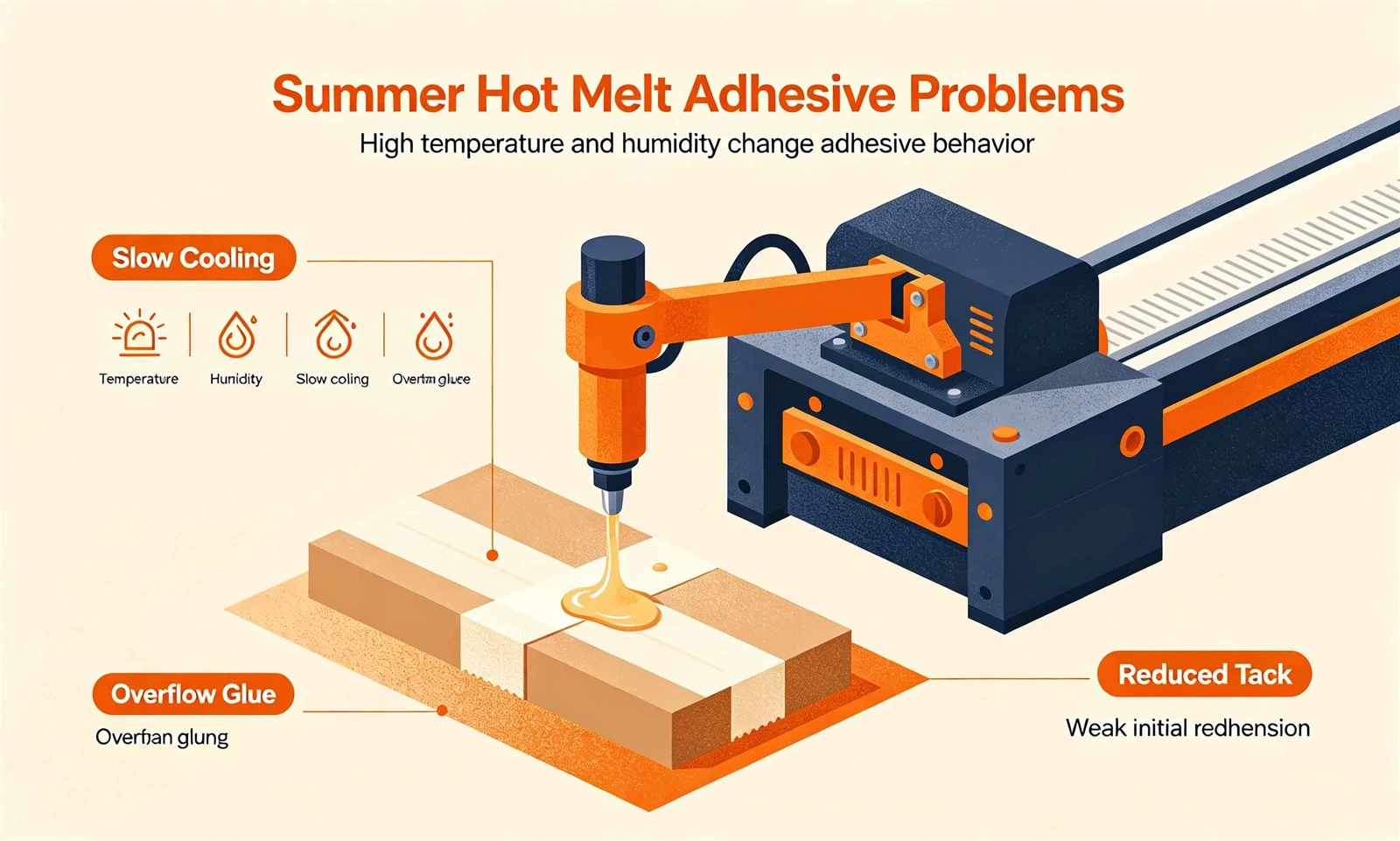
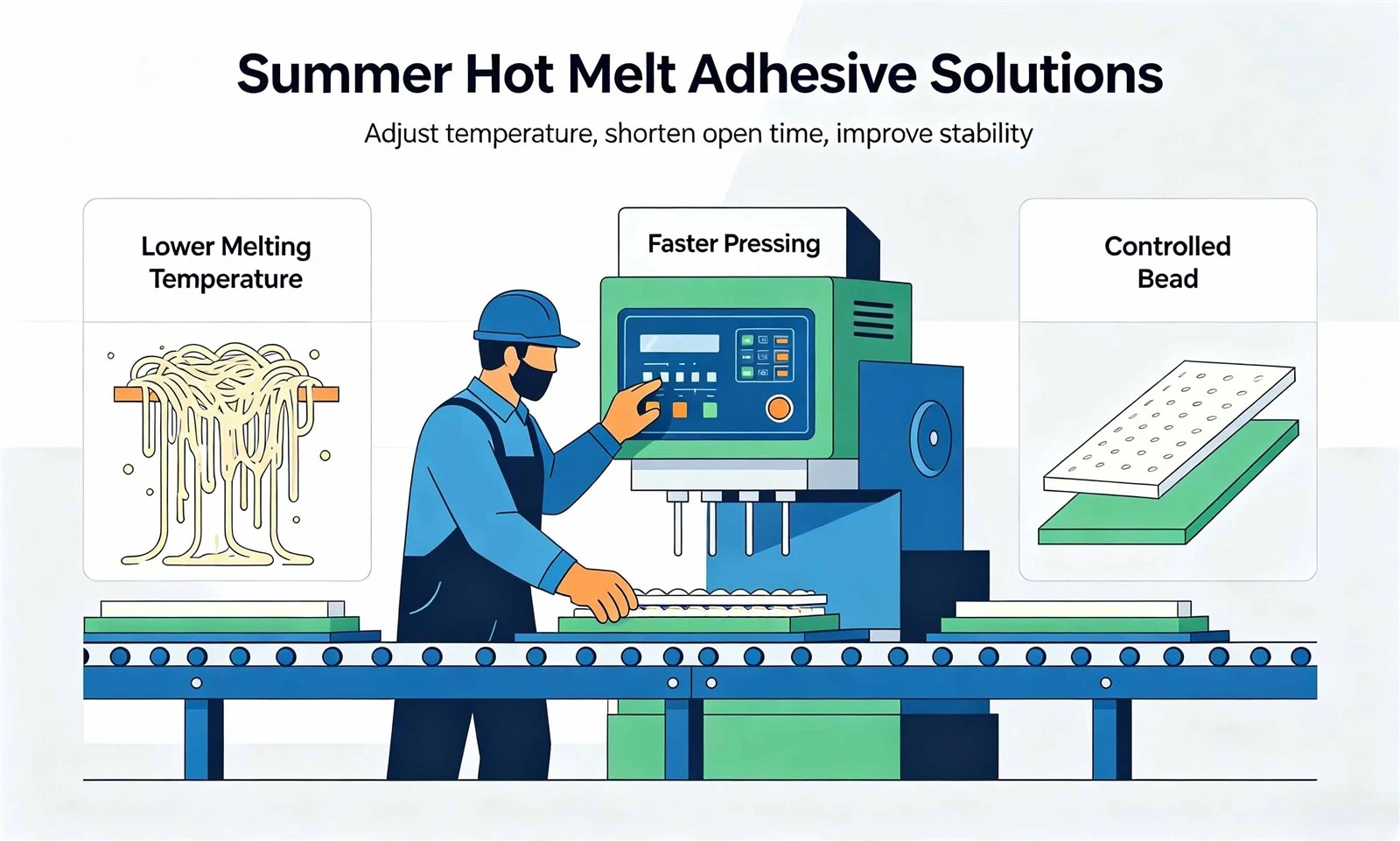
The most prominent issue in summer is the overflow and slow solidification of colloids. When the ambient temperature exceeds 35°C, the cooling and solidification speed of hot melt adhesives slows down significantly, doubling the open time. The adhesive liquid remains in a low-viscosity flowing state for a long time, which is prone to overflow, stringing, and accumulation of overflow, leading to adhesive leakage on the bonding surface, appearance defects, and false solidification. The surface is solidified but the interior is not fully cured, making it extremely easy to degrade and delaminate in the later stage. To address this issue, the temperature of the melting equipment can be appropriately lowered by 5-10°C to reduce the fluidity of the adhesive liquid; at the same time, the coating and pressing pace can be accelerated to shorten the open time of the adhesive, ensuring rapid setting of the bonded substrate.
Next, there is a decrease in high-temperature bonding strength and insufficient heat resistance. Ordinary EVA hot melt adhesives have limited high-temperature resistance. During storage and transportation of finished products in summer, exposure to sunlight and high-temperature accumulation can easily soften and creep the adhesive, leading to issues such as loose bonding, delamination, and debonding. The key solution is to replace the adhesive type as needed. For high-temperature conditions, it is preferable to use high-temperature resistant PO, modified EVA, or PUR hot melt adhesives to enhance the heat resistance and creep resistance of the adhesive. Before mass production, high-temperature simulation tests can be conducted to ensure that the bonding strength meets standards under high-temperature conditions.
In addition, deterioration and failure due to high humidity are common issues in summer storage. Exposure to high temperatures can easily lead to softening, adhesion, and agglomeration of glue particles and glue sticks, resulting in deterioration. Under humid weather conditions such as during the rainy season, hot-melt adhesives like PUR are prone to absorbing moisture, causing bubbles and poor adhesion after curing. It is necessary to store glue in a cool, ventilated, dry, and dark area, with storage temperature controlled below 35°C, to prevent exposure to sunlight and high temperatures. Once opened, the glue should be sealed to avoid moisture absorption, thereby addressing potential risks associated with glue use from the source.