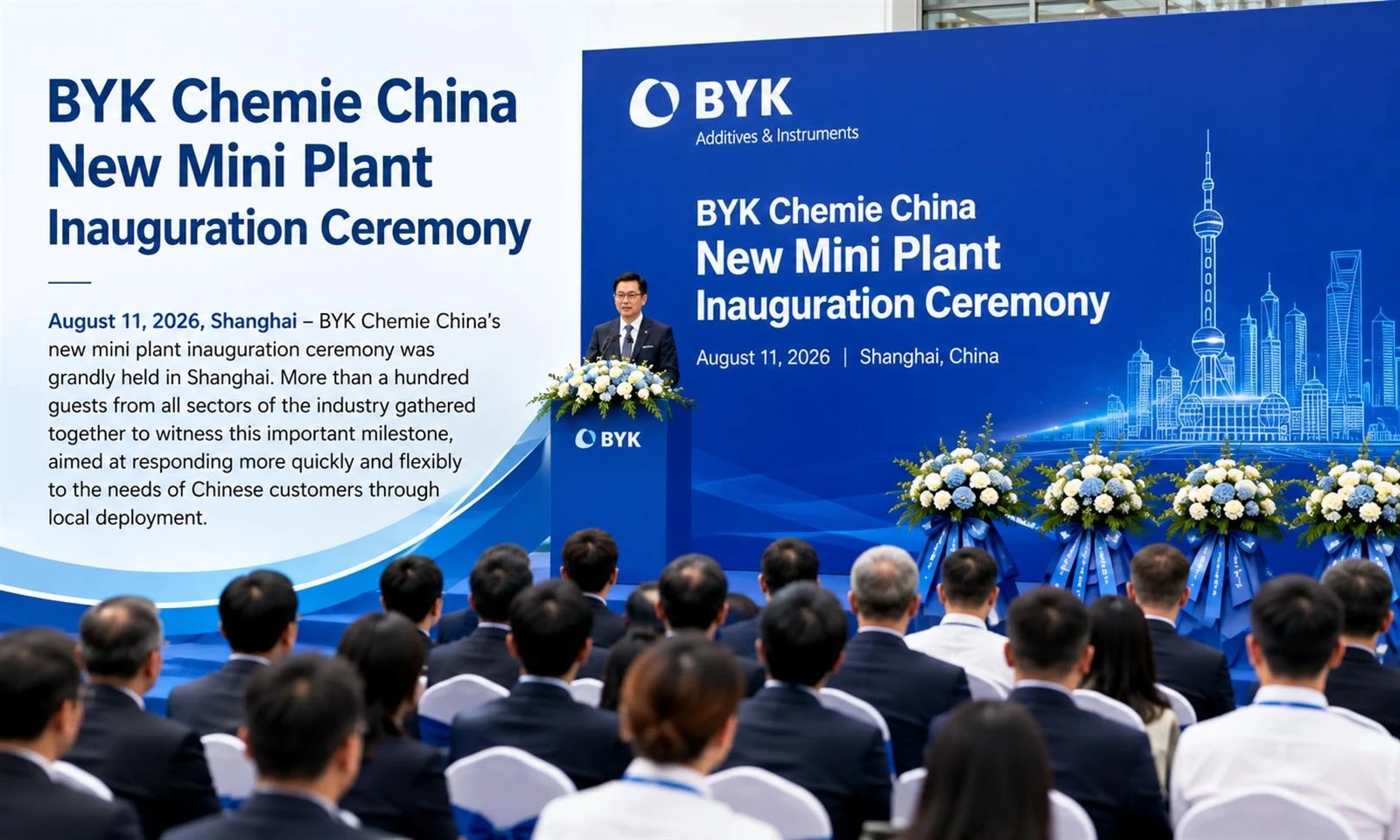
On August 11, 2026, the inauguration ceremony for BYK China's new mini-plant was held in Shanghai. Over a hundred industry guests from the coatings, plastics, adhesives, and related sectors gathered to witness this significant strategic move. The completion of this mini-plant not only marks a key step in BYK's deeper cultivation of the Chinese market but also reflects how global specialty chemical companies are leveraging local R&D, production, and supply chain capabilities to respond more rapidly to the market's evolving demands.
According to public information, the newly commissioned mini-plant is equipped with four production lines and has an annual capacity of approximately 500 tons, focusing primarily on silicone-based, silicone-free, and wax-based additives. While 500 tons is modest compared to the designed annual capacities of BYK's Shanghai site (approx. 20,000 tons) and Tongling site (30,000 tons), the facility's core value lies not in sheer scale, but in a production model characterized by "small batches, high product variety, and high flexibility."
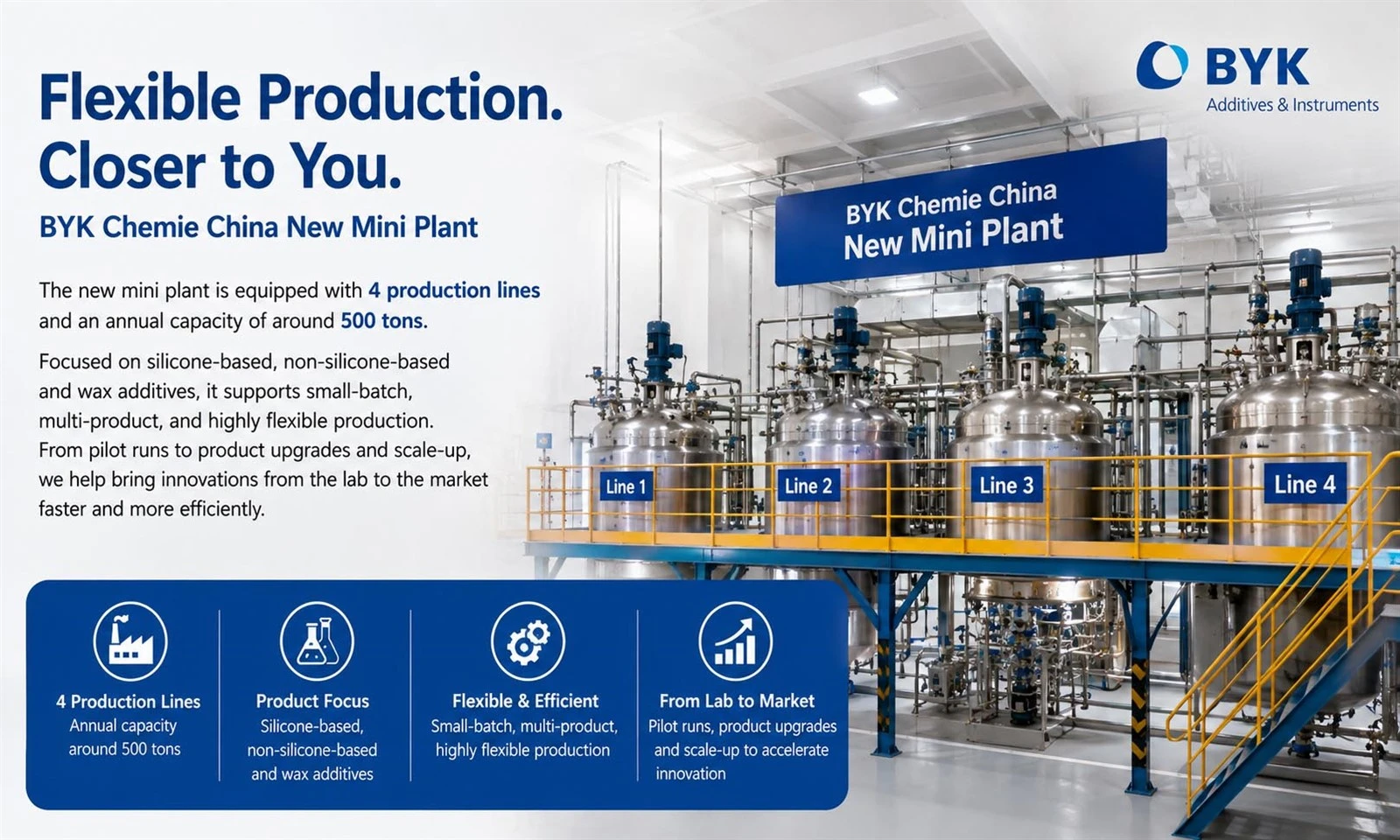
In today's rapidly changing materials market, customer demand is shifting from standardized products toward differentiated, customized, and rapidly evolving solutions. This trend is particularly evident in sectors such as new energy vehicles, electronics manufacturing, green coatings, advanced plastics, and high-performance adhesives, where product development cycles are constantly shortening. The mini-plant is capable of handling tasks such as pilot production, product upgrades, and scaling up new products, thereby accelerating the transition of R&D outcomes from the laboratory to actual production and market application. Recruitment information indicates that BYK has closely integrated the mini-plant with initiatives such as the localization of raw materials, product transfers, and pilot production processes, further strengthening its local innovation capabilities.
In fact, BYK's localization strategy in China predates this mini-plant. Since its Shanghai integrated site began operations in 2019, the company has built comprehensive capabilities spanning R&D, technical services, logistics, and production. The Shanghai site has subsequently expanded capacity while progressively enhancing its smart manufacturing and green production capabilities. Official data shows that BYK maintains production bases in both Shanghai and Tongling, continuously refining its technical service and supply systems for Chinese customers.
What makes this mini-plant particularly noteworthy is its approach of "end-to-end localization." By bringing R&D, pilot production, manufacturing, and delivery closer together, companies can shorten product development and supply cycles, while also enabling customers to accelerate formula validation and time-to-market. This flexible manufacturing model offers valuable insights for materials industries such as adhesives, coatings, inks, and plastics.
From an industry perspective, the completion of BYK's "mini-factory" in Shanghai sends a clear signal: future competition in specialty chemicals will not merely be about the performance of individual products, but rather a comprehensive contest involving R&D speed, customization capabilities, supply chain efficiency, and local technical service. As China's manufacturing sector continues to upgrade toward high performance, sustainability, and intelligent operations, localized manufacturing systems-capable of staying closer to customers and rapidly translating innovations into reality-will become a crucial pillar for enhancing the market competitiveness of materials companies.