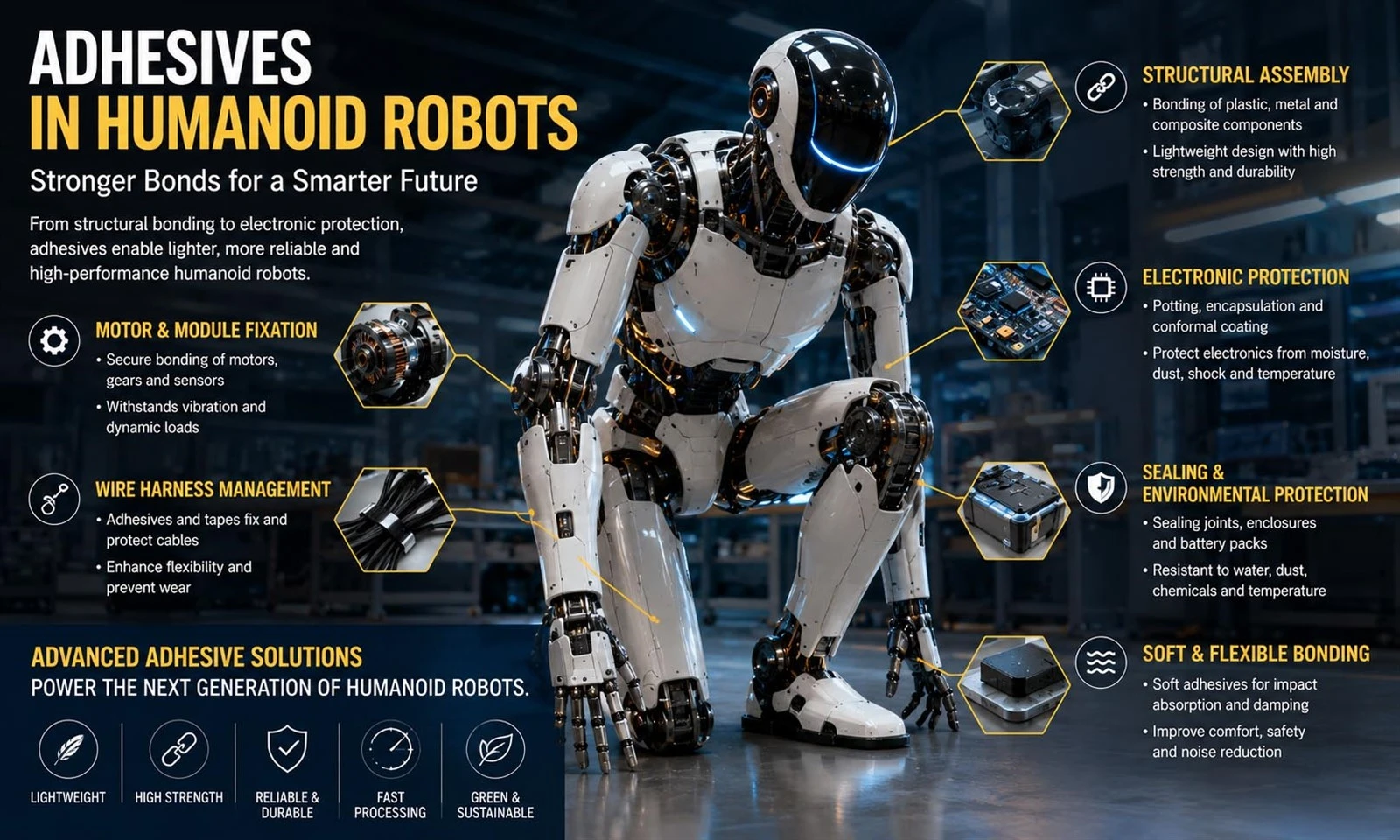
With the rapid development of artificial intelligence, precision manufacturing, and robotics, humanoid robots are gradually moving from the laboratory to industrial manufacturing, commercial services, and home applications. Compared with traditional mechanical equipment, humanoid robots are characterized by complex structures, numerous parts, and high degrees of freedom of movement, thus placing higher demands on lightweight design, reliable connections, sealing protection, and flexible assembly. Adhesives, with their advantages of light weight, uniform stress distribution, and suitability for joining dissimilar materials, are becoming an indispensable material in the manufacturing process of humanoid robots.
1. Bonding Structural Components to the Shell
Humanoid robots typically use lightweight materials such as aluminum alloys, engineering plastics, and carbon fiber composites. Traditional screw and riveting methods can increase weight and create localized stress concentrations. Structural adhesives can be used to connect robot shells, frames, and composite material components, achieving lightweight design while ensuring bond strength. Epoxy adhesives, polyurethane adhesives, and modified acrylic adhesives all have significant application potential.
2. Motor, Reducer, and Precision Component Fixing
Robot joints require frequent rotation, oscillation, and start-stop operations, placing high demands on the vibration resistance and fatigue resistance of the connection points. Adhesives can be used to fix sensors, circuit assemblies, small electronic components, and some precision parts, reducing the number of mechanical fasteners while also providing cushioning and anti-loosening effects. Adhesive technology has significant advantages for miniaturized, highly integrated joint modules.
3. Electronic Component and Circuit Protection
Humanoid robots integrate numerous circuit boards, sensors, connectors, and wiring harnesses. Electronic-grade adhesives can be used for component fixing, wiring harness organization, local potting, and protection, helping to reduce the impact of vibration, shock, moisture, and dust on electronic systems. Silicone, epoxy, and polyurethane materials can be selected based on different temperature, flexibility, and insulation requirements.
4. Wire Harness and Flexible Component Applications
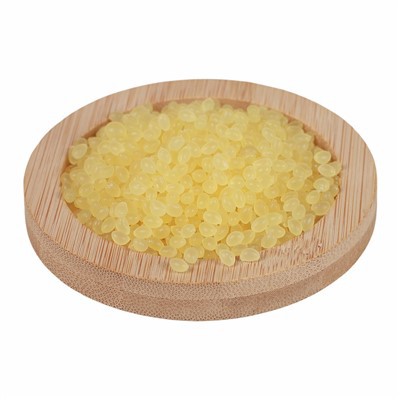
During robot movement, joint wiring harnesses repeatedly bend, thus requiring a balance between fixation strength and flexibility. Hot melt adhesives, pressure-sensitive adhesives, and flexible adhesives can be used for wire harness positioning, protective sleeve fixing, and bonding of flexible materials, reducing the risk of wire harness loosening, wear, and interference. Hot melt adhesives, in particular, feature fast curing speed, solvent-free operation, and suitability for automated production.
5. Sealing and Protection
As the application environments of humanoid robots continue to expand, their internal components require better dustproof, moisture-proof, and environmentally resistant properties. Adhesives and sealants can be used to seal shell seams, battery modules, sensor components, and connection points, improving the long-term reliability of the product.
Overall, the role of adhesives in humanoid robots is evolving from the traditional "auxiliary fixing" to "structural connection, sealing and protection, vibration damping and cushioning, and functional integration." In the future, as robots further develop towards lightweight, precision, and mass production, low-volatility, high-strength, fatigue-resistant, fast-curing adhesives suitable for automated dispensing and coating will have even broader application prospects.