


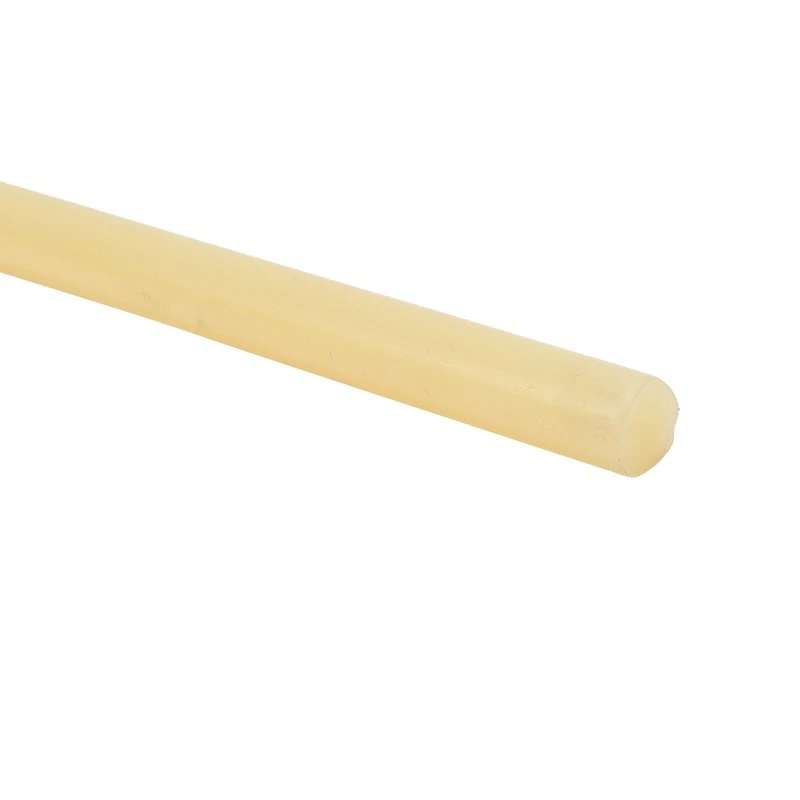
As a supplier of Yellow Hot Melt Sticks, I've witnessed firsthand the importance of tackiness in these versatile products. Tackiness, often referred to as the ability of an adhesive to form an immediate bond upon contact, plays a crucial role in the performance of yellow hot melt sticks across various applications. In this blog post, I'll delve into the factors that influence the tackiness of yellow hot melt sticks and how it varies in different scenarios.
Composition of Yellow Hot Melt Sticks
Yellow hot melt sticks are typically composed of a blend of polymers, waxes, resins, and additives. Each component contributes to the overall properties of the adhesive, including its tackiness.
Polymers: Polymers are the backbone of hot melt adhesives. They provide the adhesive with its strength, flexibility, and adhesion properties. Different types of polymers, such as ethylene-vinyl acetate (EVA), polyolefins, and styrene block copolymers, can be used in yellow hot melt sticks. EVA is one of the most commonly used polymers due to its excellent balance of adhesion, flexibility, and melt flow properties. The molecular weight and composition of the polymer can significantly affect the tackiness of the adhesive. Higher molecular weight polymers generally result in lower tack, while lower molecular weight polymers can increase tack but may also reduce the cohesive strength of the adhesive.
Waxes: Waxes are added to hot melt adhesives to modify their viscosity, melting point, and tackiness. They can improve the flow properties of the adhesive and reduce its stickiness at room temperature. Paraffin wax, microcrystalline wax, and synthetic waxes are commonly used in yellow hot melt sticks. The type and amount of wax used can have a significant impact on the tackiness of the adhesive. For example, adding a small amount of low-melting-point wax can increase the initial tack of the adhesive, while a higher amount of wax can reduce tack and improve the open time of the adhesive.
Resins: Resins are used to enhance the adhesion and tackiness of hot melt adhesives. They can also improve the compatibility of the polymer and wax components. Natural resins, such as rosin and terpene resins, and synthetic resins, such as hydrocarbon resins and phenolic resins, are commonly used in yellow hot melt sticks. The type and amount of resin used can significantly affect the tackiness of the adhesive. For example, adding a high-tack resin can increase the initial tack and peel strength of the adhesive, while a low-tack resin can improve the heat resistance and shear strength of the adhesive.
Additives: Additives are used to improve the performance and stability of hot melt adhesives. They can include antioxidants, UV stabilizers, plasticizers, and fillers. Antioxidants are added to prevent the oxidation and degradation of the adhesive over time, while UV stabilizers can protect the adhesive from the harmful effects of sunlight. Plasticizers can improve the flexibility and tackiness of the adhesive, while fillers can reduce the cost and improve the physical properties of the adhesive.
Application Temperature
The application temperature of yellow hot melt sticks is a critical factor that affects their tackiness. Hot melt adhesives are typically applied in a molten state, and the temperature at which they are applied can significantly affect their performance.

Initial Tack: At higher application temperatures, the adhesive has a lower viscosity and can flow more easily, resulting in better wetting and higher initial tack. This is because the higher temperature allows the adhesive to penetrate the surface of the substrate and form a stronger bond. However, if the temperature is too high, the adhesive may lose its tackiness quickly due to the evaporation of volatile components or the degradation of the polymer.
Open Time: The open time of a hot melt adhesive is the period during which the adhesive remains tacky and can form a bond. At higher application temperatures, the open time of the adhesive is generally shorter because the adhesive cools and solidifies more quickly. This can be a disadvantage in applications where a longer open time is required, such as in assembly operations or when bonding large surfaces.
Set Time: The set time of a hot melt adhesive is the period during which the adhesive reaches its full strength. At higher application temperatures, the set time of the adhesive is generally shorter because the adhesive cools and solidifies more quickly. This can be an advantage in applications where a fast set time is required, such as in packaging operations or when bonding small parts.
Substrate Surface
The surface properties of the substrate can also have a significant impact on the tackiness of yellow hot melt sticks. Different substrates have different surface energies, roughness, and porosity, which can affect the wetting and adhesion of the adhesive.
Surface Energy: The surface energy of a substrate is a measure of its ability to attract and hold a liquid. Substrates with high surface energy, such as metals and glass, are generally easier to bond with hot melt adhesives because the adhesive can wet the surface more easily. Substrates with low surface energy, such as plastics and rubbers, are more difficult to bond because the adhesive may not wet the surface effectively. To improve the adhesion of hot melt adhesives to low surface energy substrates, surface treatments such as corona treatment, plasma treatment, or priming may be required.
Roughness: The roughness of a substrate can also affect the wetting and adhesion of the adhesive. Rough surfaces provide more surface area for the adhesive to bond to, which can increase the initial tack and peel strength of the adhesive. However, if the surface is too rough, the adhesive may not be able to penetrate the pores and crevices of the surface, resulting in poor adhesion.
Porosity: The porosity of a substrate can also affect the wetting and adhesion of the adhesive. Porous substrates, such as wood and paper, can absorb the adhesive, which can increase the initial tack and peel strength of the adhesive. However, if the substrate is too porous, the adhesive may be absorbed too quickly, resulting in a loss of tackiness and poor adhesion.
Environmental Conditions
The environmental conditions during application and storage can also affect the tackiness of yellow hot melt sticks. Temperature, humidity, and exposure to sunlight can all have a significant impact on the performance of the adhesive.
Temperature: The temperature of the environment can affect the viscosity and tackiness of the adhesive. At lower temperatures, the adhesive has a higher viscosity and may be more difficult to apply. The tackiness of the adhesive may also be reduced at lower temperatures because the adhesive cools and solidifies more quickly. At higher temperatures, the adhesive has a lower viscosity and can flow more easily, resulting in better wetting and higher initial tack. However, if the temperature is too high, the adhesive may lose its tackiness quickly due to the evaporation of volatile components or the degradation of the polymer.
Humidity: The humidity of the environment can also affect the tackiness of the adhesive. High humidity can cause the adhesive to absorb moisture, which can reduce its tackiness and adhesion. Moisture can also cause the adhesive to swell and become soft, which can affect its performance. To prevent the absorption of moisture, the adhesive should be stored in a dry environment and applied under low humidity conditions.
Exposure to Sunlight: Exposure to sunlight can cause the adhesive to degrade and lose its tackiness. UV radiation can break down the polymer chains in the adhesive, resulting in a loss of strength and adhesion. To prevent the degradation of the adhesive, it should be stored in a dark environment and protected from sunlight during application.
Applications of Yellow Hot Melt Sticks
Yellow hot melt sticks are widely used in a variety of applications due to their excellent tackiness, adhesion, and versatility. Some of the common applications of yellow hot melt sticks include:
Packaging: Yellow hot melt sticks are commonly used in the packaging industry to seal boxes, cartons, and envelopes. They provide a strong and reliable bond that can withstand the rigors of transportation and storage. The high tackiness of the adhesive allows it to form an immediate bond upon contact, which is essential for high-speed packaging operations.
Woodworking: Yellow hot melt sticks are also used in the woodworking industry to bond wood, veneer, and other materials. They provide a strong and durable bond that can withstand the stresses of woodworking operations. The high tackiness of the adhesive allows it to form a bond quickly, which is essential for woodworking applications where time is of the essence.
Crafts and Hobbies: Yellow hot melt sticks are popular among crafters and hobbyists due to their ease of use and versatility. They can be used to bond a variety of materials, including paper, fabric, plastic, and metal. The high tackiness of the adhesive allows it to form a strong bond quickly, which is essential for crafts and hobbies where precision and speed are important.
Automotive: Yellow hot melt sticks are also used in the automotive industry to bond interior trim, upholstery, and other components. They provide a strong and reliable bond that can withstand the vibrations and temperature changes of automotive applications. The high tackiness of the adhesive allows it to form a bond quickly, which is essential for automotive manufacturing operations.
Conclusion
In conclusion, the tackiness of yellow hot melt sticks can vary depending on a variety of factors, including their composition, application temperature, substrate surface, and environmental conditions. As a supplier of Yellow Hot Melt Sticks, we understand the importance of tackiness in these versatile products and are committed to providing our customers with high-quality adhesives that meet their specific needs.
If you're interested in learning more about our Yellow Hot Melt Stick or other products, such as Co Extruded Hot Melt Adhesive and Environmentally Friendly Hot Melt Adhesive, please feel free to contact us. We'd be happy to discuss your requirements and provide you with a customized solution.
References
- "Hot Melt Adhesives: Technology and Applications" by Charles A. Dostal
- "Adhesion and Adhesives Technology: An Introduction" by C. A. Dostal
- "Handbook of Adhesive Technology" edited by Samuel M. Wu


