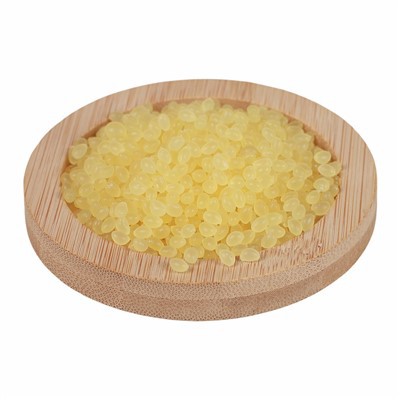
Introduction to Petroleum Resin
Petroleum resins are thermoplastic oligomers produced from petroleum cracking byproducts through processing, polymerization, and distillation. Their molecular weights range from 300 to 3000. They come in various types, primarily classified by the raw material fraction: aliphatic (C5 fraction), aromatic (C9 fraction), C5/C9 copolymers, alicyclic (DCPD), and hydrogenated petroleum resins. These different types of petroleum resins, due to their unique properties, are widely used in a variety of industries and fields, including rubber, adhesives, coatings, inks, and plastic modification. C5 petroleum resins are aliphatic petroleum resins produced by polymerizing isoprene, cyclopentadiene, 1,3-pentadiene, and 1-pentene, derived from the cracking oil produced during the production of olefins from petroleum cracking, in the presence of an acidic catalyst. They exhibit high peel strength, good quick-tack properties, stable adhesive properties, suitable melt viscosity, excellent heat resistance, good compatibility with polymer matrices, and low cost. They also exhibit excellent aging resistance, are light in color, transparent, low in odor, and have low volatile content. In hot melt adhesive applications, C5 petroleum resin can be used alone as a tackifying resin or mixed with other tackifying resins to improve the performance of hot melt adhesives. C9 petroleum resin, also known as aromatic petroleum resin, contains benzene rings and cyclic structures, has some double bonds, has strong cohesion, and has good acid and alkali resistance, chemical resistance, and water resistance. However, its bonding performance is poor, it is relatively brittle, and its aging resistance is not ideal, making it unsuitable for use alone. Due to its strong polarity, it has poor compatibility with non-polar polymers, and its performance needs to be improved through copolymerization or hydrogenation modification. C5/C9 copolymer petroleum resin is formed by copolymerization of dicyclopentadiene, isoprene, 1,3-pentadiene, etc. under an acidic catalyst. It combines the excellent properties of C5 petroleum resin and C9 petroleum resin, with high initial viscosity and heat resistance, and is suitable for complex formulation systems. DCPD petroleum resin is usually obtained by polymerizing dicyclopentadiene under high temperature and high pressure. DCPD petroleum resin usually has the characteristics of high softening point, good viscosity-increasing effect and strong stability. Its largest application is in the field of rubber mixing and ink additives. It can also be used in the fields of paints, coatings and adhesives.

Application of petroleum resin in adhesive industry
The main application areas of petroleum resins are rubber, adhesives, coatings, inks, and plastic modification. In the adhesive field, petroleum resins are mainly used as tackifiers, which can significantly improve the bonding strength and heat resistance of adhesives. Different types of petroleum resins have different application focuses depending on their characteristics. For example, C5 petroleum resin is widely used in hot melt adhesives and pressure-sensitive adhesives due to its high peel strength and good quick adhesion. It is particularly suitable for applications with high requirements for transparency and low volatility. C9 petroleum resin has shortcomings such as poor bonding properties and high brittleness, making it unsuitable for standalone application. However, after copolymerization or hydrogenation modification, C9 petroleum resin has certain applications in industrial adhesives due to its excellent acid, alkali, and chemical resistance, especially in applications requiring water resistance and cohesion. C5/C9 copolymer resins, because they combine the advantages of C5 and C9 resins, perform well in complex formulation systems and are often used in the development of high-performance adhesives. Furthermore, hydrogenated petroleum resins, due to their reduced color and odor, are becoming the material of choice in the high-end adhesive market, particularly in areas such as food packaging, healthcare, and bookbinding, where environmental and safety requirements are high. Beyond adhesives, petroleum resins are also widely used in the adhesive tape industry. By combining with other materials, petroleum resins can impart excellent initial tack and sustained adhesion to adhesive tapes, while also improving their weather resistance and aging resistance. These properties make petroleum resins irreplaceable in industrial tapes, medical tapes, and specialty functional tapes.
China's petroleum resin market situation in 2024
My country's petroleum resin market is projected to show steady growth in 2024. With the continued recovery of the domestic economy and the rapid development of downstream industries, demand for petroleum resins is increasing significantly. Market demand is particularly stable in traditional applications such as adhesives, coatings, and inks. In particular, my country's total hot-melt adhesive production is projected to increase from 1.6159 million tons (2023) to 1.8010 million tons in 2024, a year-on-year increase of approximately 11.5%. This growth trend is expected to further expand the market for petroleum resins, a key raw material for hot-melt adhesives. According to relevant data, my country's total petroleum resin production will exceed one million tons in 2024, with the share of C5 petroleum resins, C5/C9 copolymers, and hydrogenated resins continuing to rise, demonstrating a growing demand for high-performance, environmentally friendly adhesive products. On the supply side, competition in my country's petroleum resin industry is fierce, with a wide range of manufacturers, including state-owned enterprises, private enterprises, multinational corporations, and small and medium-sized enterprises. These companies exhibit significant differences in production capabilities, technological levels, and market penetration. In recent years, major domestic manufacturers have gradually consolidated their market position through technological upgrades and capacity expansion, leading to increased industry concentration and pressure for consolidation among small and medium-sized enterprises. Regionally, East China remains the core region for petroleum resin production and consumption in my country, accounting for over 50% of the market share. South China and North China follow closely behind, benefiting from the agglomeration effect of their local manufacturing industries and possessing significant market potential. Furthermore, with the deepening implementation of the Belt and Road Initiative, my country's petroleum resin exports have also increased, particularly in Southeast Asia and the Middle East. However, hydrogenated products currently rely on imports, which will be a key focus for domestic companies in the future. Competition in the domestic market has also intensified in recent years. While international petroleum resin companies are accelerating their expansion into the Chinese market, bringing technological and brand advantages, they are also facing significant operational pressure from fluctuating raw material prices and rising logistics costs. Therefore, how to maintain product quality while reducing costs has become a pressing issue for petroleum resin companies. Overall, the Chinese petroleum resin market in 2024 presents both opportunities and challenges, with the industry as a whole exhibiting a new trend of high-quality development.
Forecast of the future development prospects of petroleum resins
From a market perspective, with growing environmental awareness and increasingly stringent regulations, the environmental performance requirements for petroleum resins are also increasing. In the future, petroleum resin products with environmentally friendly properties such as low volatile organic compound (VOC) emissions and biodegradability will be more competitive. In terms of technological innovation, the demand for hydrogenated and bio-based resins is growing annually, and industries such as electronic packaging and new energy vehicles are likely to become major growth drivers. Consequently, companies are constantly exploring new synthesis pathways and modification methods to further optimize the properties of petroleum resins. For example, by employing new catalysts or advanced polymerization processes, petroleum resins with narrower molecular weight distributions and more defined structures can be produced, thereby meeting the unique material performance requirements of various industries. From an industry chain perspective, petroleum resin manufacturers will strengthen cooperation with upstream and downstream companies. On the one hand, they will establish long-term, stable partnerships with petrochemical raw material suppliers to ensure a stable supply and quality control of raw materials. On the other hand, they will strengthen communication and collaboration with downstream users to gain a deeper understanding of their needs and jointly develop new products and solutions. This collaborative development model within the industry chain will help enhance the competitiveness and risk resilience of the entire industry. Furthermore, with global economic development and industrial restructuring, demand for petroleum resins in emerging markets is rapidly growing. In particular, booming infrastructure construction, manufacturing, and consumer goods sectors in Asia, Africa, and South America are expected to create new opportunities for the petroleum resin market. As a key chemical product, petroleum resins will face both opportunities and challenges in the future. Companies must continuously optimize and innovate their products, strengthen market development, and collaborate across the industry chain to adapt to market changes and developments and achieve sustainable development goals.